How long does a tankless water heater installation take?
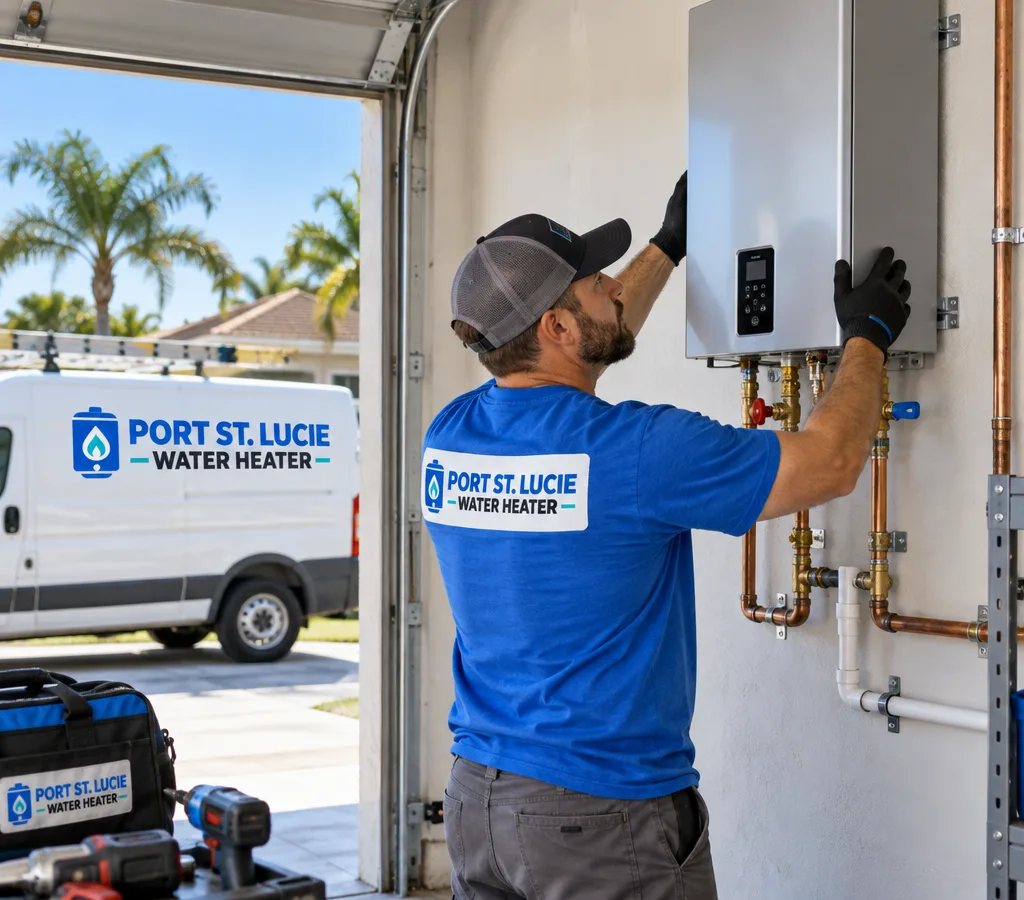
Most tankless installs take one day, while a tank to tankless conversion can take longer if venting, gas line sizing, or electrical changes are needed. The timeline depends on how far the new vent route runs, whether a condensate drain must be added, and how accessible the install location is.
Can you replace my existing tankless water heater with a new one?
Yes. A tankless water heater replacement is often straightforward when venting, gas/electric supply, and service valves are already in place and in good condition. We still verify sizing and compatibility so the new unit matches your household demand and the existing venting category.
Do I need a permit for tankless water heater installation in Port St. Lucie?
Often, yes, especially when fuel piping, electrical circuits, or venting is modified. Requirements vary by scope, so we confirm what applies to your specific installation plan and handle the work so it can be inspected if required.
What are signs I need tankless water heater repair?
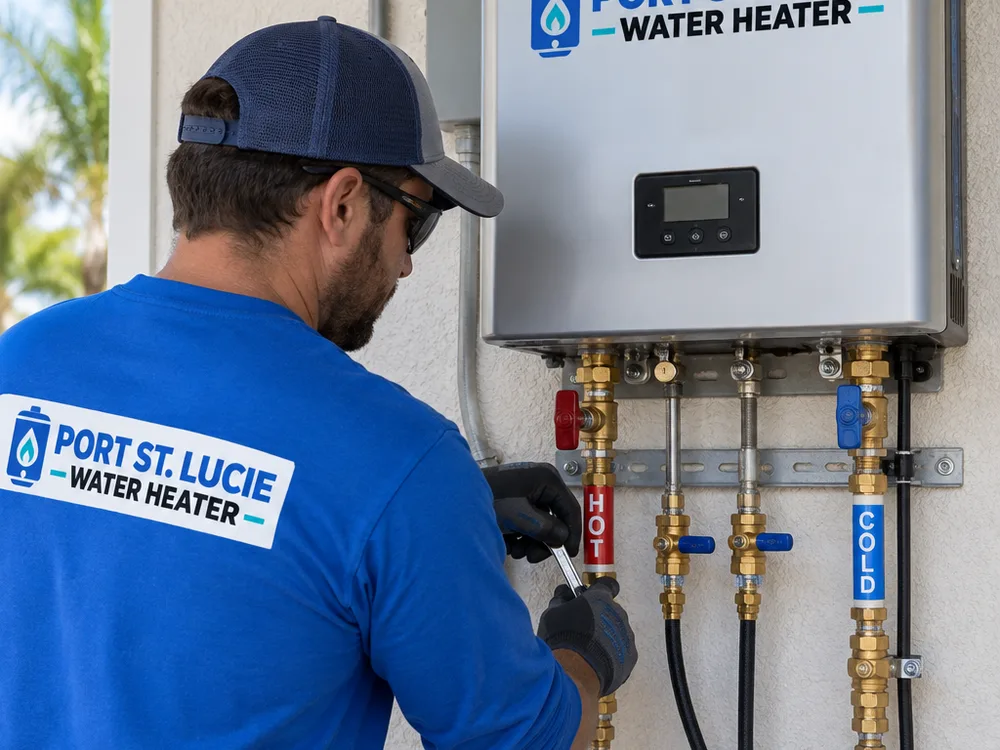
Common signs include inconsistent hot water temperature, the unit shutting off mid-use, reduced hot water flow, visible error codes, or unusual noise during operation. Those symptoms can point to scale buildup, sensor problems, ignition issues (gas), or restricted airflow/venting, and the fix depends on what testing shows.
How often should tankless water heater flushing be done?
Most households plan on annual tankless water heater flushing, with frequency adjusted based on water conditions and how heavily the system is used. If you see reduced flow, temperature swings, or repeat error codes, a flush may be due, but we'll also check filters and components so you don't pay for maintenance that doesn't address the root cause.
Will a tankless system work with my home's existing gas line or electrical panel?
Sometimes it will, and sometimes upgrades are needed. Gas tankless units may require a larger gas line or a shorter run to deliver enough volume, and electric tankless units can require high amperage with multiple breakers. We confirm capacity and code-compliant routing before we finalize the install plan.