Proper shutoffs and connections
We confirm the gas shutoff is accessible and the water connections are sound, then pressure-test and leak-check after hookup.
Serving Port St. Lucie, Florida & surrounding areas
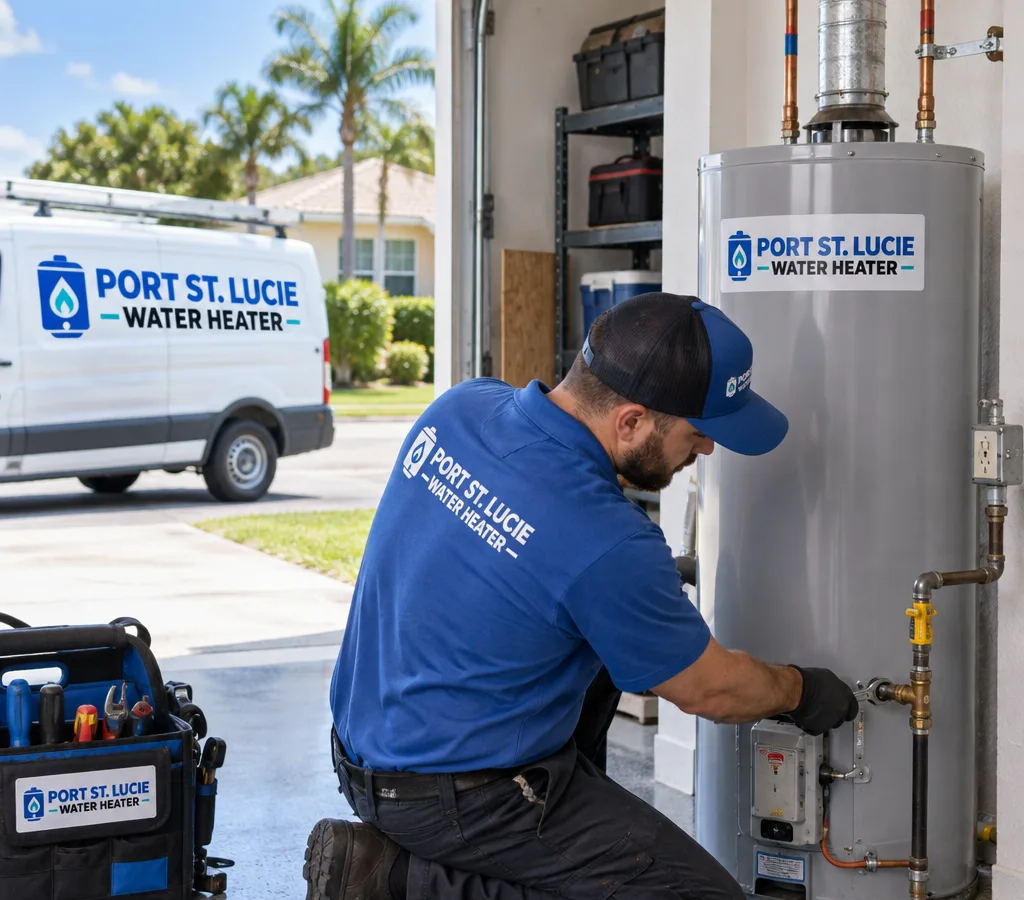
Get dependable hot water with a clean, code-minded install and a clear replacement plan for your Port St. Lucie home. We handle gas, electric, and the common fixes that decide whether you really need a new tank.
A proper gas water heater installation is more than swapping a tank. The venting, gas piping, shutoff valves, expansion control, and temperature and pressure relief piping all have to be correct for safe operation. In Port St. Lucie, many water heaters sit in garages or utility closets, so clearances, combustion air, and vent routing matter.
Port St. Lucie Water Heater installs new gas water heaters and replaces failing units with a focus on practical decisions: keep the same fuel when it makes sense, switch to electric when gas venting or space makes it a better fit, and repair when a safe, economical fix is available. If you are also dealing with leaks or no hot water right now, you can start with water heater repair and we will help you decide whether repair or replacement is the smarter move after inspection.
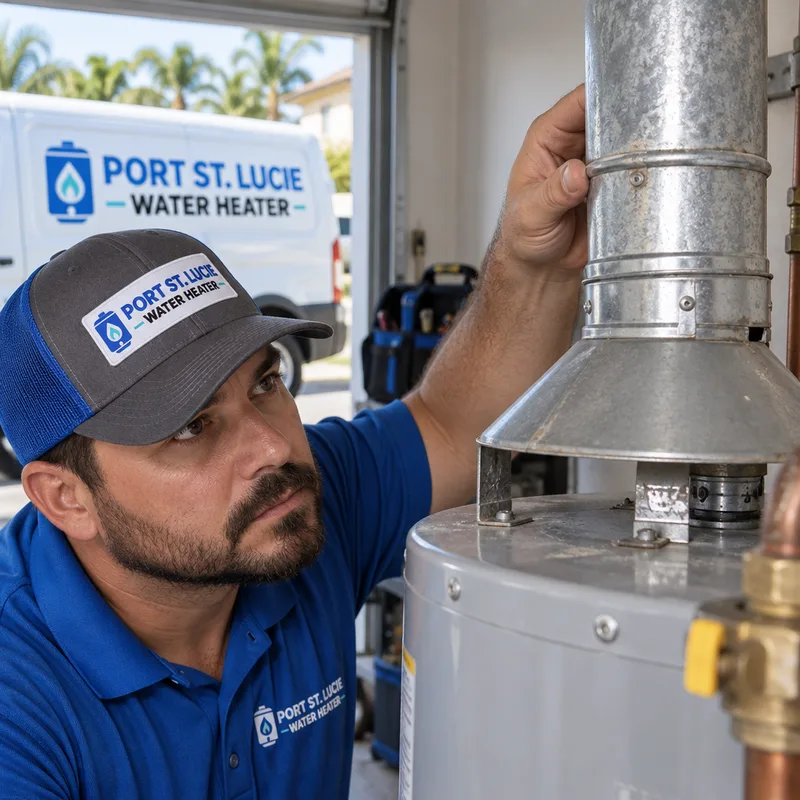
If you are searching for gas water heater replacement Port St. Lucie, it usually means the unit is leaking, the burner will not stay lit, or recovery is slow. Before replacing, we look at a few points that change the recommendation:
When repair makes sense, we can address common issues under gas water heater repair Port St. Lucie service. When replacement is the better choice, we size the unit to your household use and the location constraints, then install and test it the right way.
We confirm the gas shutoff is accessible and the water connections are sound, then pressure-test and leak-check after hookup.
Draft and vent condition are verified so exhaust gases move safely out of the home, not into the garage or closet.
The temperature and pressure relief valve and discharge piping are set up so the heater can relieve pressure safely if needed.
After installation we run the system, verify burner operation for gas or heating operation for electric, and confirm stable hot water output.
If the issue is a serviceable component like a thermostat or electric element, we explain the options and expected outcomes before any work proceeds.
Some Port St. Lucie homes are better served by electric, especially when venting a gas unit is complicated by the heater location. We handle electric water heater installation for homeowners who are replacing an existing electric tank or converting from gas after a site check. The goal is simple: safe wiring, correct breaker and conductor sizing for the unit, solid plumbing connections, and reliable temperature control.
If you already have an electric unit and it is underperforming, you may not need a full electric water heater replacement Port St. Lucie homeowners worry about. Many electric complaints come down to failed components like thermostats or heating elements. We troubleshoot first, then recommend repair or replacement based on what we find and the age and condition of the tank.
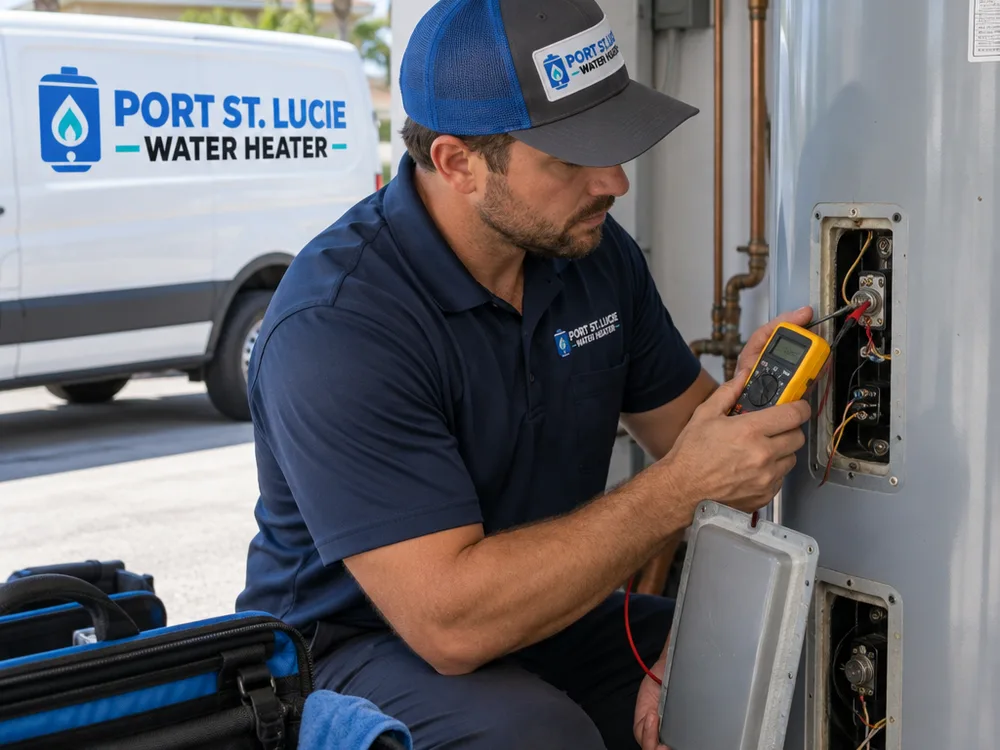
Electric tanks rely on one or two heating elements and thermostats to keep water at the set temperature. When one part fails, symptoms can look like a dying heater: slow recovery, short hot water supply, or water that never gets truly hot.
If you need electric water heater repair Port St. Lucie residents can count on, we treat it like a diagnostic job first, not an automatic replacement. If the tank is leaking or heavily corroded, we will tell you plainly and move to a replacement plan.
We confirm fuel type, location constraints, venting requirements for gas, and household hot water demand so the replacement matches how you use hot water.
Water and fuel or power are shut off properly, the old heater is disconnected, and the area is protected for removal.
We set the new unit, connect water lines, gas or electrical, verify the T&P relief setup, and address any needed vent or connection corrections.
We fill and purge the tank, start the heater, test operation, and set the temperature to a practical level for comfort and safety.
You get a quick walk-through of shutoffs, normal operation, and what changes in performance should prompt service.
Gas water heater installation in Port St. Lucie typically ranges from about $1,600 to $3,800+ for a standard tank replacement, depending on heater size, venting needs, and whether gas piping or shutoff components need updates. Electric water heater installations often run about $1,100 to $2,700+, with price moving based on amperage requirements, wiring condition, and accessibility.
Final cost changes with capacity (40 vs. 50 gallons, high-recovery models), code corrections (venting, expansion control, drain pan, or piping), and how difficult removal and placement are in the existing location. Exact pricing is confirmed after an on-site evaluation of the current heater and connections.
Many replacements require a permit and inspection when gas piping, venting, or major plumbing connections are involved, and it is often the safest way to confirm the installation meets current requirements. The simplest approach is to have the installation reviewed up front so the scope includes any corrections that inspectors commonly look for, such as venting configuration and T&P discharge piping.
A straightforward swap commonly takes a few hours, but it can take longer when venting needs correction, the gas shutoff or connector needs updating, or the heater location is tight. If the old unit is leaking badly or the area needs cleanup for safe placement, that can also extend the timeline.
Element replacement is a good option when the tank is not leaking and the problem is limited to slow recovery or reduced hot water from a failed element. If the tank is corroded, actively leaking, or the electrical compartment shows heat damage, replacement is usually the safer long-term decision.
Temperature that swings between hot and lukewarm, a unit that trips the reset, or water that never reaches the set temperature can point to thermostat problems on electric tanks. We confirm it with testing rather than guessing, since similar symptoms can come from a failed element or a wiring issue.
Yes, switching to electric is possible when the location and electrical service support it, and it can be a practical solution if venting a gas unit is difficult. The key steps are verifying electrical capacity, adding or confirming the correct circuit, and making sure the old gas line is handled safely after the conversion.
Leave the area and get the gas supply checked immediately by the appropriate emergency or utility resources, then have a qualified technician inspect the water heater and gas connections before the unit is used again. Gas odor is not a wait-and-see situation, and the heater should remain off until the source is identified and corrected.
Tell us what you are seeing—leak, no hot water, temperature swings, or slow recovery—and we will recommend the right next step, whether that is gas water heater installation, a repair, or an element or thermostat replacement. Service is based out of 792 SW Grove Ave, Suite 4 in Port St. Lucie.